
News
Trump’s new travel ban hits millions of migrants from 19 nations across the U.S.
Why punish the people?
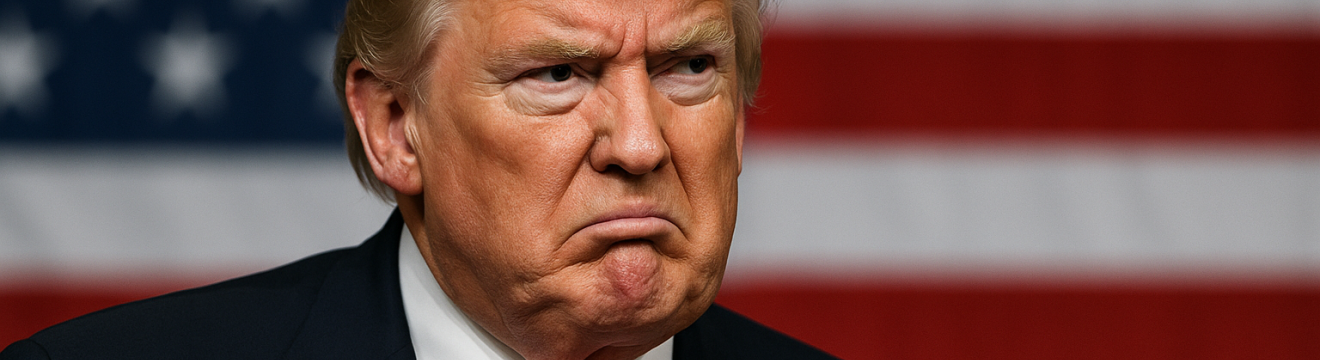
The human numeric behind Anti-Immigration Policy (Source: Saman Hajibabaei )

The Human Cost of Trump’s Immigration Agenda
(Source: Saman Hajibabaei )
(Source: Saman Hajibabaei )
This restriction appears even more contradictory when seen in the context of the American society that exists today. Iranian physicians, Somali engineers, and many other specialists from the countries on the list have played essential roles in building the country in which they now live. Despite this history, an administration with family origins in Germany is choosing to reinforce a narrative of identity that stands at odds with the reality of a nation created by immigrants rather than by any concept of native ancestry.
Instead of addressing the governments or political systems of those countries, the policy again places the burden on people who have no involvement in geopolitical conflicts. Their lives and futures are pushed into uncertainty, even though they are the individuals most removed from the decisions, miscalculations, and disputes that shape international relations.
The Unvarnished Numbers and the Human Cost of Anti Immigration Policy
At the beginning of 2025 the population of foreign born residents in the United States reached a historic high: fifty three point three million people, representing nearly sixteen percent of the entire population. By June 2025 however the figure had dropped to fifty one point nine million. This sharp demographic decline was the first significant contraction in the foreign born population in more than half a century and reflected a rapid exodus of individuals who were either forced out by detention and deportation or felt compelled to leave under the pressure of intensified enforcement.Immigrants are central to the functioning of the American economy. As of 2025 foreign born workers made up approximately nineteen percent of the US labor force. They are essential in healthcare, agriculture, construction, logistics, manufacturing, technology and social services. Their contributions sustain not only labor markets but also the housing, caregiving and infrastructure systems that keep the country stable. Removing large numbers of these workers does not simply disrupt individual households but undermines entire sectors.
Studies from 2025 document that immigration enforcement raids in agricultural regions caused workforce reductions of twenty to forty percent. The resulting losses in production and disruptions in supply chains translated into multibillion dollar economic damage while also driving up consumer prices for basic products. This is only one example among many that demonstrates how political hostility toward immigrants inflicts real economic harm far beyond immigration statistics.
Before this wave of enforcement the number of undocumented immigrants had reached a historic peak of fourteen million by 2023. Many of these individuals held temporary protections including asylum applications, TPS classifications or humanitarian parole. Once the administration changed in 2025 many of these protections were removed or weakened which intensified fear and accelerated the decline in the immigrant population.
Before this wave of enforcement the number of undocumented immigrants had reached a historic peak of fourteen million by 2023. Many of these individuals held temporary protections including asylum applications, TPS classifications or humanitarian parole. Once the administration changed in 2025 many of these protections were removed or weakened which intensified fear and accelerated the decline in the immigrant population.
Immigration detention expanded dramatically. By November 2025 there were more than sixty five thousand people held in US Immigration and Customs Enforcement custody. More than seventy three percent of them had no criminal convictions. Their confinement was based solely on civil immigration violations. These facts directly contradict repeated claims that enforcement is aimed at dangerous offenders. The overwhelming majority of detainees are workers, students, parents and refugees who have contributed to the country’s economy and communities for years.
Reports from rights organizations and journalists depict overcrowded and poorly managed detention centers with insufficient access to lawyers, inadequate medical care and significant psychological harm to families. Communities with long standing immigrant populations face fragmentation and fear. Children born in the United States to immigrant parents increasingly live with the anxiety that their parents may vanish overnight due to a sudden arrest. Schools, social service agencies and local economies struggle with the instability.
Reports from rights organizations and journalists depict overcrowded and poorly managed detention centers with insufficient access to lawyers, inadequate medical care and significant psychological harm to families. Communities with long standing immigrant populations face fragmentation and fear. Children born in the United States to immigrant parents increasingly live with the anxiety that their parents may vanish overnight due to a sudden arrest. Schools, social service agencies and local economies struggle with the instability.
The broader economic consequences are clear. Industries heavily reliant on immigrant labor including agriculture, hospitality, construction and caregiving face severe shortages. Professionals such as doctors, nurses, engineers and educators encounter legal uncertainty or choose to leave. This combination threatens to weaken the labor market, increase costs and widen existing inequalities.
For European readers this is more than a domestic American issue. It is a warning that even societies built on pluralism and immigration can transform into systems that devalue immigrants and treat them as expendable. When migration becomes a political liability instead of a national strength, democratic norms and human dignity are placed in jeopardy.
For European readers this is more than a domestic American issue. It is a warning that even societies built on pluralism and immigration can transform into systems that devalue immigrants and treat them as expendable. When migration becomes a political liability instead of a national strength, democratic norms and human dignity are placed in jeopardy.
The Contradiction Between Rhetoric and Realpolitik in US Foreign Policy
While the domestic crackdown on immigrants intensifies, American foreign policy has exhibited a contradictory approach toward authoritarian regimes. Over recent years millions of Iranians have openly rejected the Islamic Republic through protests, civil resistance and global campaigns. They have expressed a clear desire for change, dignity and accountability.In theory a nation that claims to champion democracy and human rights should align itself with such aspirations. Yet the Trump administration’s decisions have repeatedly favored geopolitical convenience rather than supporting the population demanding freedom. During periods of acute tension between Iran and Israel many Iranians believed that the ruling structure in Tehran was at its most vulnerable point. Some were convinced that continued pressure for only a few more days could have reshaped the balance of power.
Instead the US abruptly pushed for de escalation, creating shock and disappointment among Iranians who believed they were on the brink of historical transformation. This decision appeared to preserve the status quo rather than challenge an unpopular regime. It revealed the distance between the administration’s rhetoric and its actual objectives. Under the banner of maximum pressure the greatest pressure fell not on the Iranian leadership but on ordinary Iranians who were already paying the highest price.
Immigration, Power and the Future of Democracy
Trump is not the owner of this country and he is certainly not the owner of the United States. The presidency is not a throne and a democracy is not a private estate. The nation he claims to defend was built by generations of immigrants whose labor, knowledge and sacrifices shaped every institution that has allowed the United States to thrive. Attempting to manipulate those institutions for personal spectacle undermines the very foundation of democratic governance.This cycle of impulsive decisions and public chaos must end. Leadership requires discipline, accountability and an understanding of the real human lives shaped by every policy. Instead the constant oscillation between escalation and retreat has created perpetual uncertainty not only for Americans but for millions of migrants whose futures depend on stability and fairness. Power does not grant permission for disorder. A president is not a monarch. And the future of entire nations cannot hinge on the impulses of a single individual.
The truth emerging from these events is clear. What is presented as security, sovereignty or national identity is in practice an aggressive campaign of exclusion and social control. The cost is paid by immigrants, by vulnerable communities and ultimately by democracy itself. If society remains silent these policies will expand and the damage will reverberate far beyond the borders of the United States. Defending human dignity is not simply a moral position but a necessity for the preservation of justice and equality worldwide.
more information: https://Bobshub.de
Liability for this article lies with the author, who also holds the copyright. Editorial content from USPA may be quoted on other websites as long as the quote comprises no more than 5% of the entire text, is marked as such and the source is named (via hyperlink).